Checkers: Classic Board Game
One Way Street EntertainmentBoard
4.8362.00 Reviews
- Version
- 2.35.0
- Installs
- 1.00M
- Age Rating
- Everyone
Screenshots
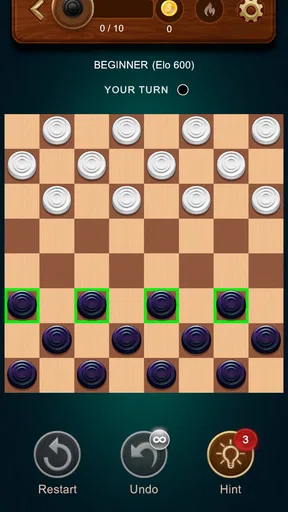
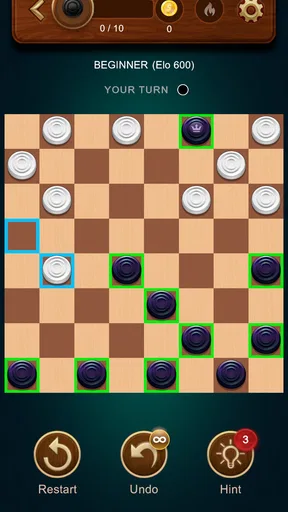
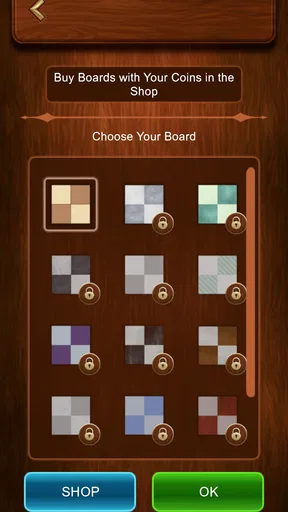
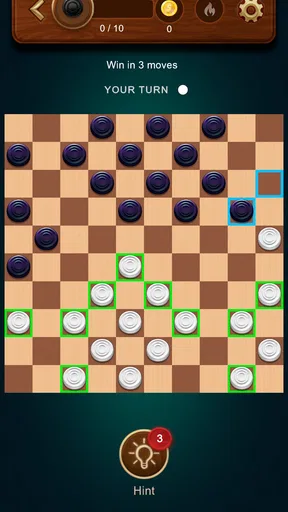
Our Review of Checkers: Classic Board Game
 Analysis by Appyee
I spent time with Checkers: Classic Board Game as a straightforward board-game app, and its appeal became clear quickly: it keeps the focus on moving pieces, spotting captures, and trying to outthink the other side. There is no need to learn a complicated rule set before starting. If you already know checkers, you can settle in immediately; if you do not, the familiar board makes the game approachable enough to learn by playing.
That simplicity is both its strongest quality and its main limitation. This is not the kind of game I would open for a large collection of unrelated modes or a deep progression system. I would choose it when I want a compact checkers experience that is easy to understand and suitable for a broad audience. The app is free, carries an Everyone age rating, and comes from One Way Street Entertainment.
What playing it feels like in everyday use
The best way to understand this game is to picture a short break during an ordinary day. I might have a few minutes while waiting for an appointment, or want something calmer than a fast action game before bed. A checkers match fits that moment well because every move has a clear purpose, yet I can pause mentally between turns and reassess the board.
That rhythm also makes it useful for playing with someone nearby. Checkers does not require a long explanation, special equipment, or a large time commitment. Two people can look at the same board and begin discussing possible moves almost immediately. For families, that low entry barrier matters more than a long feature list. Younger players can concentrate on legal movement and captures, while more experienced players can introduce ideas such as protecting pieces, controlling routes, and avoiding forced exchanges.
I would not describe the experience as flashy. The pleasure comes from the board state changing gradually. A move that looks harmless can open a capture, block a route, or leave a piece exposed several turns later. That makes the app more satisfying than its short store description suggests, but only if you enjoy thinking through consequences rather than chasing constant visual stimulation.
Learning the board instead of memorizing menus
One practical strength is that the central activity is immediately visible. The board is the conversation between the player and the game. I do not need to navigate through layers of unrelated content to understand what I am supposed to do. That makes this a comfortable choice for someone who wants a classic board game rather than a platform built around collecting extras.
For a new player, I recommend treating the first few matches as lessons in position rather than trying to win every turn. Watch which pieces become isolated, notice when a capture is forced, and ask whether moving one piece creates a route for another. This approach is more useful than simply advancing the nearest checker. The app’s uncomplicated presentation gives beginners room to build those habits without the distraction of a larger gaming system.
There is also a useful social advantage in its familiarity. If I hand the phone to a relative who rarely plays mobile games, I can explain the objective using the physical board games many people already know. That makes the app a better bridge between traditional tabletop play and mobile gaming than a more elaborate strategy title would be.
Where progress can become pressure
Checkers has a natural way of creating pressure even without dramatic effects. Once several pieces are close together, each decision can change the available captures. I often find myself looking beyond the immediate move and asking what the opponent will be able to do next. That is where a basic-looking match starts to feel like a genuine strategy exercise.
A useful personal rule is to count escape squares before moving a piece toward the opponent. Advancing can feel productive, but a checker with no safe follow-up may simply become a target. I also try not to trade pieces automatically. A capture can reduce clutter, yet it may open a lane that favors the other side. These are small adjustments, but they make repeat matches more interesting than playing by instinct.
The pressure is not always enjoyable. Players who prefer visible unlocks, missions, character customization, or a strong sense of account progression may find the experience thin. A classic board game does not automatically provide the motivational structure of a larger mobile title. If your ideal session includes rewards arriving after every round, this may feel too bare.
That trade-off is important when deciding whether to spend time with it. The satisfaction here comes from improving judgment, not from building a collection. I would recommend it to someone who enjoys gradually making fewer careless moves. I would skip it for a player who needs constant novelty or a substantial progression track to stay interested.
Fairness matters more than presentation
For a board game, fairness is mostly about whether the result feels connected to decisions. Checkers is naturally well suited to that standard because the board gives both sides the same basic type of problem. A strong position should come from seeing more clearly, not from owning a stronger piece or buying an advantage.
I appreciate that the game’s identity is easy to understand. It is presented as a checkers title, not as a broader economy-driven game that happens to contain a board. That focus makes it easier for me to judge a match on its play rather than on how much content I have accumulated.
Still, fairness is not the same as equal enjoyment for every player. A beginner facing someone experienced may lose repeatedly even when the rules are perfectly balanced. The right response is not necessarily to abandon the game. It can be more productive to slow down, review the moment a piece became vulnerable, and identify whether the loss came from a forced sequence or from a rushed decision. The app works best when both players accept that improvement may be gradual.
There is another kind of fairness worth considering: fairness to the player’s attention. A focused board game should let me think without making the session feel like a sales funnel. Since the game is free, I naturally pay attention to whether spending becomes central to the experience. The confirmed purchase information establishes that the app is free, but it does not establish a price structure or specific paid systems that I can responsibly describe. I therefore judge it primarily as a no-cost entry point, without promising that every surrounding detail of monetization works a particular way.
Spending, expectations, and what I would check first
If I were recommending the app to a friend, I would set a simple expectation: install it for the checkers experience, not because you are expecting a large paid-content ecosystem. The verified price is free, which removes the most obvious barrier to trying it. That is especially helpful for parents deciding whether a child can explore a board game without committing money at the outset.
At the same time, I would still encourage anyone who is sensitive to purchases to look at the current in-app screens before handing over a device. The available facts confirm that the app itself is free, but they do not establish particular optional purchases, subscription terms, or advertising behavior. I would not invent those details or treat the absence of a listed purchase fact as proof that no spending prompts exist.
This is a good example of how to keep expectations realistic. Free does not automatically mean feature-rich, completely offline, or free of every possible interruption. It simply means the listed price to obtain the game is free. For my own decision, that is enough to justify trying it, but not enough to promise a particular purchase-free experience.
Who will get the most from it
I see the strongest fit in four situations. First, it suits beginners who want a familiar board game without a steep learning curve. Second, it works for experienced checkers players who want a convenient digital board. Third, it can serve families looking for a simple turn-based activity. Finally, it is a reasonable choice for anyone who enjoys quiet, deliberate games during short breaks.
The Everyone rating supports that broad accessibility, although an age label cannot tell me whether the strategic challenge will suit every player. A child may understand the movement rules quickly but still need help with planning ahead. An adult may find the rules easy but enjoy the game only if they appreciate repeated tactical decisions. The same board can therefore be welcoming to beginners and still offer enough tension for patient players.
I would be more cautious about recommending it to people who want a full competitive platform. If your priority is a large online community, extensive rankings, tournament tools, replay analysis, or a wide selection of variants, you should compare it with a more specialized checkers service before settling in. This app’s confirmed identity is that of a classic board game, not a promise of an esports-style environment.
How it compares with the usual alternatives
Compared with playing on a physical board, the mobile version is more convenient. I do not need to find a table, unpack pieces, or remember where the match was interrupted. The trade-off is that a phone screen does not create the same shared presence as sitting opposite another person. For family play, a physical set may still be warmer; for solo practice or portability, the app is easier.
Compared with a general board-game collection, this title is more focused. A collection gives variety, but it can also make checkers feel like one small option among many. Here, the board game itself remains the reason to open the app. That is better when I already know what I want to play and less useful when I am browsing for a new type of game.
Compared with a highly competitive checkers platform, the likely advantage is approachability. The classic framing is less intimidating for a casual player. The likely disadvantage is that a specialist platform may offer more tools for serious improvement or organized competition. I would choose this app for accessible matches and choose the specialist alternative when measuring progress against a broader competitive field is the main goal.
Technical context and trust signals
The app was released on December 6, 2024, and the current version is 2.35.0. It supports devices running Android 7.0 or later, which gives it a practical compatibility range for many older Android phones and tablets. That is useful if you are installing it on a family device rather than a recent flagship.
Its reception is also a meaningful signal, though not a guarantee of personal fit. The game has a 4.8 average from around fifty-nine thousand ratings, alongside more than three hundred written reviews. It has passed one million installs. Those figures suggest that the simple format connects with a substantial audience, but popularity cannot tell me whether you personally want a quiet strategy game or a feature-heavy competitive product.
I treat the developer information in the same measured way. One Way Street Entertainment is clearly identified as the developer, which gives the app a straightforward point of accountability. That does not replace reading the current store page before installing, especially if device compatibility, purchases, or permissions are important to you. Trust is built from clear expectations, not from assuming that a high rating answers every practical question.
The small decisions that make repeat matches worthwhile
My most useful adjustment was to stop judging a move only by whether it captures something. Captures are tempting because they feel immediately productive, but the resulting position may give the opponent a better chain. Before committing, I look at the squares that become available afterward and consider whether my remaining pieces can support the advance.
I also recommend using the board as a memory exercise. After each opponent move, name the threat before searching for your response. Is a piece being offered to force a capture? Is a route being closed? Is the opponent trying to draw your checker away from the group? This habit turns a casual match into a compact training session without needing a separate study mode.
For family play, I would add a no-rush rule for the first few rounds. Let newer players explain why they chose a move instead of immediately correcting them. That makes the app more useful as a shared activity and reveals whether they understand the board or are simply reacting. Once everyone is comfortable, you can introduce a second rule: after a loss, identify one decision that changed the match. That keeps competition friendly while still encouraging improvement.
These approaches also expose the game’s limits honestly. The app can provide the board and the match, but the deeper learning comes from how I choose to use each round. Players expecting an extensive built-in coaching system may want more guidance than this focused format provides. Players willing to analyze their own decisions can extract considerably more value from the same simple rules.
My verdict after weighing the unknowns
I recommend Checkers: Classic Board Game when you want a free, approachable way to play checkers on an Android device and you value the thinking inside the match more than a large collection of extras. Its broad age rating, familiar rules, and strong reception make it an easy candidate for a trial. The support for Android 7.0 or later also helps if your device is not new.
My recommendation is more qualified if you are choosing a game specifically for deep competitive infrastructure, extensive progression, or guaranteed details about purchases and interruptions. The confirmed facts establish the free listed price, but they do not establish every spending or monetization detail. I would check the live store information and the app’s current screens before making it a regular family installation.
Overall, I see this as a focused board-game companion rather than an all-purpose mobile gaming destination. It earns its place through accessibility and the quiet tension of deciding which move leaves the better position. Its real value is a clean, repeatable checkers experience for players who enjoy improving one decision at a time. If that sounds like the kind of challenge you want, trying it is sensible; if you need a larger competitive world around the board, a more specialized alternative will probably suit you better.
Verdict
Strengths of Checkers: Classic Board Game
- Simple rules make it easy for beginners to start playing.
- Offline mode lets you enjoy matches without an internet connection.
- Adjustable difficulty provides a challenge for different skill levels.
- Quick matches are convenient for short gaming sessions.
- Classic board design offers a familiar and relaxing experience.
Limitations of Checkers: Classic Board Game
- Higher difficulty levels can feel frustrating for casual players.
- Limited visual variety may make long sessions feel repetitive.
- Some features may require watching ads to unlock or continue.
- The game may lack advanced tournament or ranking options.
- Moves can feel slow when playing against the computer.
Other Releases by One Way Street Entertainment
View All
Chess Master: Board Game
Board4.8
Similar Picks in This Category
View All
Ludo King®
Gametion4.1

Ludo
Yarsa Games4.6

Tile Master® - Matching Game
Higgs Studio3.6

Checkers Online
CC Games4.6

Dominoes
Loop Games4.7

Chess
Chess Prince4.6
Frequently Asked Questions
What is Checkers: Classic Board Game?
Checkers: Classic Board Game is a digital version of the traditional draughts game for Android and iOS devices. It lets you play familiar checkers matches against computer opponents or, depending on the available mode, another person on the same device. The app focuses on straightforward board gameplay, simple controls, and classic rules rather than complicated mechanics or a large collection of unrelated features.
Can I play Checkers: Classic Board Game offline?
In most cases, the main single-player experience can be enjoyed without a constant internet connection, which makes the game suitable for travel, commuting, or places with limited service. However, certain features may require connectivity, particularly online multiplayer, advertising, cloud-related functions, or updates. It is worth opening the game once while connected so that all required resources are downloaded before playing offline.
Does the game offer different difficulty levels?
Checkers: Classic Board Game is generally designed to accommodate both casual players and people who want a more demanding challenge. Difficulty options may allow you to begin with easier computer opponents and gradually increase the strength of the artificial intelligence as your strategy improves. New players can learn basic movement and captures comfortably, while experienced players should select a higher level for more thoughtful matches.
Is Checkers: Classic Board Game suitable for beginners?
Yes, the game is approachable for beginners because checkers has a relatively small board, clear movement rules, and easy-to-understand objectives. Players who are unfamiliar with the game can learn by experimenting with legal moves, captures, and king pieces during practice matches. Before downloading, remember that rule variations can differ, especially regarding mandatory captures and multiple jumps, so check the in-game settings.
Does Checkers: Classic Board Game contain ads or in-app purchases?
The availability of advertising and optional purchases depends on the specific version published for your device and region. Free editions commonly display ads between matches or in menus, while some may offer a paid option to remove them or unlock additional features. Review the Google Play or App Store listing before installing, and check the permissions and purchase information if you want a completely uninterrupted experience.
Play our best games!


